Pages

Sunday, August 14, 2011

Chocolate and Sea Salt

Chocolate Pudding "Fregolata" with Sea Salt and Espresso Infused Olive Oil

On a Trip to the bay area last year we had the pleasure of dining at A16. One single dish stood out to me more that any other item on the menu. It was the chocolate pudding with sea salt and olive oil. It was so simply sublime. I vowed that one day I would recreate it. This Chocolate Pudding or in Italian "Budino" rest on top of a chocolate shortbread "Fregolata." I finish it with Cypress sea salt flakes and a drizzle of espresso infused olive oil. It is very simple and does not required a p.h.d. in baking. All you will need is a blend of soul, intuition and grace. 


For the Chocolate Shortbread Tart Shells


2 egg yolks
1 Tbs Heavy Cream
1 3/4 cups of "00" flour or All purpose
1/2 Cup of unsweetened Cocoa Powder
7 ounces unsalted butter at room temperature
1/3 cup of sugar
1/2 teaspoon pure vanilla extract
1/4 teaspoon of kosher salt


In a bowl, whisk together the egg yolks and cream and set aside. In another bowl, sift together the flour and cocoa powder and set aside. In a stand mixer fitted with a paddle, combine butter, sugar, vanilla and salt and mix on medium speed for three minutes until creamy and smooth. Reduce speed to low and mix in dry ingredients all at once and mix until barely combined. Drizzle in the egg mixture and mix briefly. Chill the dough in plastic wrap. When the dough is chilled mold into buttered tart shells and eight of an inch thick and set in freezer until very cold. Bake off at 350 degrees for about 20 minutes or until dry.


For the Chocolate Pudding 


7 oz of bittersweet chocolate ( Good Quality) chopped
1 1/2 oz of milk chocolate chopped
1/2 cup whole milk
6 egg yolks
1/3 cup of sugar
2 cups of heavy cream


Combine chocolates over a double boiler on low to melt the chocolate. Meanwhile warm the milk until barely simmering. In a bowl, whisk the egg yolks and sugar and gradually whisk in the warm milk. When the chocolate has melted strain the milk mixture over the chocolate and mix. In a small pot warm half the cream over medium heat to simmer. Remove from heat and stir into the chocolate mixture. Then stir in the remaining cream. Pour into a baking dish and cover. Put baking dish into a water bath and bake at 300 degrees for about 50 to 60 minutes. Or until the edges are set and the the center is loose but slightly set. Mix the pudding and chill for at least four hours to set. 


For the espresso infuse olive oil 


I like to use a fruity olive oil to help contrast the bitter flavor of the espresso.


You will simply blend 1 cup of olive oil with 2 tablespoons of espresso beans. Chill the oil after it has been blended and don't strain out the little bits. 


To serve you will place about a quarter cup of chocolate pudding into each tart shell. Garnish with a sprinkle of sea salt and a generous drizzle of the espresso olive oil.


ENJOY !!!

Friday, August 5, 2011

PEAS OF MIND


English Pea Ravioli with Merguez Sausage Ragu and Mint


This recipe is a perfect pairing. The spicy North African Lamb sausage and the sweet pea ravioli all tied together with cooling mint. So.......
How many peas equal 1# of shucked and split?That would be One thousand Two Hundred and Eighty One in case you were wondering. I have been trying to perfect the filling for an english pea ravioli and unfortunately this was my only remedy. You see when you process all of the peas with there skins it is like eating little shards of plastic, that inter-fear with the filling. Remove each skin and you are left with a creamy bright filling that melts in your mouth. Now if i was patient enough to use a food mill then i think it would pass the pea through the mill and leave the skins behind. Please let me know if this works. I encourage you when english peas are not in season to use frozen. They are picked at there peak and blanched just right. Allow about 2 hours for shucking time. Feel free to split this recipe in half if you are not up for the challenge. A full batch will make about 50 raviolis.

FOR THE FILLING

You will need; 1 # of shucked frozen peas with their skins removed. 1.5 cups of blanched and chopped mint leaves, 3/4 cup of grated parmesan cheese, 1/2 a cup of cream and season with salt and pepper.


Put all the ingredients in a food processor and pulse to form a coarse paste.

FOR THE MERGUEZ SAUSAGE RAGU

You will need 1 # of merguez sausage removed from casing.
1 28 oz can of peeled tomatoes. I use Carmelina from Italy. It is almost mandatory to use a Italian canned tomato product. A half of Carrot grated. A half of a sweet onion diced, two cloves of garlic, two tablespoons of thyme leaves, three tablespoons of Olive Oil and about 5 mint leaves torn in half.

First we are going to start off by sweating the onions and chopped garlic in the olive oil. When the onions start to get golden around the edges add in the carrots and thyme. Sweat for a couple more minutes to cook out the raw flavor from the carrots and then add in the canned Italian tomatoes. Let simmer adding a little water if it becomes too thick. Cook for about 30 minutes and then puree. Pass through a fine mesh strainer into a pot. Add in your merguez sausage and skim off some off the fat. Cook through. Add in the mint leaves and then pulse in a food processor until you have a smooth but course ragu.


FOR THE PASTA

The renowned Italian Chef from Philadelphia Mark Vetri gave us this recipe when I worked at Tavern. It uses all egg yolks which give it a nice color and fat content which creates a nice elasticity to form around a filling. It also uses tipo "OO" Caputo flour from Naples Italy and Extra Fancy Durum wheat flour both found on Amazon.com. I have altered his recipe and added milk instead of water to the dough which is a trick I learned from my old Chef Alex Stratta. When rolling out the dough it is important to get it very thin but not too thin. You don't want the filling to be lost with too much pasta. But you want to taste the pasta as well. You will need;

6.5 oz of Tipo "00" Flour, plus more for dusting
2.5 oz of Durum Wheat Flour
9 Large egg Yolks
3 to 4 Tablespoons of Milk
1 Tablespoon of Extra Virgin Olive Oil

Combine All ingredients in a Stand Mixer fitted with a dough hook. And mix on Medium speed for about 5 minutes until shiny and elastic. If the dough is not coming together add a couple drops of milk until it comes clean from the side of the bowl.  Refrigerate for at least 1 hour.

Cut the dough into 6 pieces and roll on the largest setting on a pasta machine. I use an Atlas pasta roller. You can find them at Sur La Table. On my machine with 9 being the thinnest I roll it out to a 7. Make sure to dust the counter with flour to prevent form sticking. Also dust a plate with flour that you are going to put your finished raviolis on. You are going to cut your sheets into 3 inch squares. Turn the squares so the points are at 12 O'clock. Pipe a little pea filling into the center of the sheets and brush with a little egg whites. Form a triangle from the 6 O'clock position to the 12 O'clock position. Roll the filling side upward and grab the two corners tucking them downward and underneath the filling, one on top of the other like you are crossing their legs or forming an X. This is called Cappelacci. You can find variations on youtube if you need a visual.

To finish the dish heat up the Merguez Sausage Ragu and add a little chopped mint.
Get another pan on medium heat and drop a decent amount of butter into the pan.
At the same time drop about 10 raviolis into a pot of lightly salted boiling water.
Add whole mint leaves and some sugar snap peas sliced on the bias into the butter and allow to slightly brown.
Dropp the pasta in the brown butter and gently toss in the brown butter
Place a small pool of the Merguez Sausage ragu onto a plate and top with the raviolis, peas and mint.
Garnish with Parmesan Shards.


Friday, July 29, 2011

Tuna Conserva vs. Chicken of the Sea

   On a fellow chefs travels to Spain she brought us back a smorgasbord of canned seafood critters ranging from baby octopus and barnacles, to mussels and clams. We devoured them with a piquant vinegar sauce and to our delight it ruined any memories of the conveyer belt canned tuna we had grown to know. In some parts of the world these canned treasures are a delicacy and you will pay top dollar for them.
    Working for suzanne I can remember the Ortiz Ventresca Tuna de Bonito del Norte that was shipped in from Spain to top our Pan Bagnat. A Niscoise style tuna sandwich that boasted the olive oil packed tuna on french baguette dressed with a little lemon and caper, and topped with aioli, soft boiled eggs and tapenade. I can still taste in to this day. It brings me back.
    Take the massed production capitalist american water filled chicken of the sea. And weight it in next to the hand selected delicately poached olive oil packed european tuna and there is no winner by decision. It is a clear knockout in the first round. The referee didn't even have a chance to stop the fight. I mean who calls tuna "chicken of the sea" anyway?
    Now, I understand the craze about eating raw tuna. It is delicious. But don't let your misconception of canned tuna go any furthur. Try this recipe or at least go by a can of the ortiz tuna at whole foods. Don't stir it up with miracle whip. Just drain it. Add a little lemon, olive oil and some sea salt. Serve it over a white bean salad with some grilled leeks, a soft boiled egg, fried capers and a little tonnato sauce. Or toss it with a panzanella of tomatoes and cucumbers with some vinegar.  Either way it won't disappoint.  


For this recipe we are folding in the tuna with padron peppers that have been cooked over a charcoal flame. On a dried fava bean puree with pickled radishes a Calabrian chili oil and some black sea salt crackers. Make the tuna a couple of days before to let the tuna complexity seep in.

1 # of Tuna. Preferably Ahi or Yellowfin. Cut into 1 1/2 to 2 inch slabs.
a bulb of fennel cut in half, a half of a red onion, a lemon cut in half
a couple bay leaves,  2 tablespoons of black peppercorns, a sprig of rosemary
a piece of calabrian chili torn in half


    Cover all of the aromatics with about 4 quarts of water. Bring to a simmer and let the court boullon infuse for about 15 minutes. Meanwhile season the tuna aggressively with sea salt on all sides while the aromatics are coming together. Put the tuna into a container large enough to cover the tuna in by 2 inches with the court bouillon. Let sit in the court bouillon for 12 minutes and then with a small knife peek inside. The tuna should be about medium and slightly opaque. Let the tuna carry over until just before medium well. It should be bright pink throughout. If it is not you have gone to far. Break apart by hand a piece of the tuna during this process to really see whats going on inside. Let the tuna rest on a dry linen for about 20 minutes until it is to room temperature and until it is dry.  I like to put the tuna in a mason jar covered with a lemon peel and a couple of bay leaves then drowned in olive oil.  When you are ready to serve then break up the tuna with a little anchovy, lemon and olive oil. Add sea salt if it needs.        
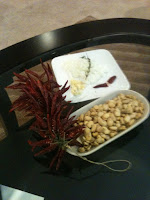
For the Fava bean Puree.                

2 cups of peeled dried favas
9 cups of water
1 cup of olive oil
5 garlic gloves smashed
1/2 of a sweet onion
1 calabrian chili torn in half                  
a sprig of rosemary

You can sub out dried white beans or cranberry beans if you like. But I like the taste of the dried fava. It gives a slight nuttiness and sweetness. First you are going to sweat the onions, rosemary, garlic and Calabrian chili in olive oil until onions are tender. Add the favas and coat in the oil. Cover with water and cook for about 1 hour until beans are breaking apart. Drain off the bean liquid and reduce until about  1 cup and then puree adding the bean liquid until you have the consistency of a loose hummus. Reserve and keep warm by covering.


For the padron peppers  you will just toss them in olive oil and sea salt and cook them over charcoal or oak. Applewood works well to.  If padron peppers are not in season then a shishito's work just fine. The secret here is to not overcook them. You want a high heat flame to char the skin and absorb the smoke flavor but you don't want them to be mush. And remember they will continue to soften when you take them off the flames. Cut the tops off of them after they have come to room temperature.

For the Olive Oil and Black Salt Crackers you will need:  

2 cups of "00" Flour ( Order on Amazon)
1/4 cup of water
1 Tablespoon of Wheat germ
1 Tablespoon of Olive Oil
1/2 a teaspoon of Kosher Salt
Fresh Ground Black Pepper
Olive oil for brushing
Black Sea Salt Flakes ( Whole Foods) You can buy by the gram

In a mixer with a dough hook combine all ingredients and mix until combined and forms a sticky ball. Let rest covered with a towel for 10 minutes. Cut into quarters, dust your hands with flour and roll through a pasta machine or with a rolling pin until you get it very thin. Brush the bottom of a sheet tray with olive oil and place the cracker dough on top. Brush with more olive oil and black sea salt and bake at 500 degrees until golden brown. Let the Cracker cool and break into medium size rustic pieces.

To finish I just garnish with slices of radish that have been soaked with rice wine vinegar for about 10 minutes. And then we mix calabrian chili paste with lemon, fish sauce, and olive oil.

Sunday, July 24, 2011


   DUCK SUGO SEDUCTION

             Sugo + Nonna = Tasty Meat Gravy. Its       almost the same as the newly found art of the crock pot but just with out the set it and forget it. You see with Italian cuisine nonna (grandma)  doesn't leave the house. She nutures the sugo. Early that morning she negotiates the meat with the butcher. She picks the herbs from the garden, she fries the meat in the fat from her prosciutto brodo. And if she were from bologna she would finish the gravy with the unpasturized milk from her neighbors cows utter while double fisting a bottle of Lambrusco in the other hand. Well.... my irish grandma would if she were from bologna. But really... Have you had a bolognese sauce here in america. It is crap. It is made from hamburg meat. The true Bolognese sauce was made from hand ground hanger steak and braised like a piece of shortrib. Creating layers of flavor from constantly reducing the natural juices in the pan to form a fond (Crust and the bottom of the pan) and then deglazing it with a small amount of liquid only to reform the fond and repeat. This is how you need to treat the sugo or any sausage ragu for that matter. You dont just turn the stove on low and walk away.

        In this case we are using ground duck leg meat to make our duck sugo. Just ask your butcher to order some in for you. Before we get to that lets talk about the prosciutto brodo. Ask your butcher to save all of the prosciutto scraps and end pieces for you. Im am sure they will be happy to do as there is quite seldomly a request for this. This means you don't have to buy the proscuitto at full cost but at a cheaper rate. You should have about 2 # of meat for this recipe.


Cube up the prosciutto and put in a pot covered with water and bring to a simmer. Skim off all the impurities and lower the heat to medium and cook covered for about 3 hours until all of the fat has melted into the brodo and the connective tissues in the meat have broken down. Enjoy the aroma of cured meat broth that takes over your domaine. For this is the smell of authentic Italian cuisine. Not fussy but time consuming.


I strained my prosciutto brodo into a mason jar and covered with an air tight lid. And into the fridge overnight. Use the fat at the top if the brodo to fry you duck meat in. Think of it like melted lardo.


     Now we are ready to start cooking. Take off the fat from the the top of the prosciutto and fry the ground duck meat in it at a very low tempurature. Break up the meat so that there are no large lumps. Deglaze with a little water to release some of the fond on the bottom of the pan. At this point add in a half of sweet onion, 2 ribs of small diced celery, a half of bulb of fennel, half of a grated carrot, 2 cups of mushrooms ( preferably black trumpet, chanterelle or porcini), 1 tsp of rosemary and a quarter pound diced of pancetta. Slowly cook the vegatables and mushrooms until you obtain a golden color and the fat from the pancetta renders out.


Once a fond builds on the bottom of your pan then deglaze with white wine. In this case to balance the richness of the duck i used about 2 cups of a dry moscato. Once again reduce the wine until you create one last fond to build layers of depth and richness.


Deglaze with about 5 cups of your prosciutto brodo and a half of cup of milk. Lightly season as the prosciutto brodo is has a pronounced salty flavor. Cover and simmer on low heat for at least 2 hours adding more liquid if it gets too dry.


Finish the Duck Sugo with a tablespoon of vincotto ( Fig Vinegar) and a basic tomato puree. (Pureed Good quality Italian Canned tomatoes. Note: I use carmelina from Whole foods) About 1 cup. Reduce the gravy until it coats the back of a spoon.


The Fig Vinegar and tomato puree give the sauce a nice balance of sweet and acidic that helps cut the richness of the duck. Notice how this is not a tomato based sauce but rather finished with a little tomato.


Now For the Ricotta Cavatelli                                

10 oz of Tipo "OO" Flour ( Buy on Amazon)
8 oz of drained Ricotta Cheese
2 Large Eggs
Season with salt and pepper


Mix the ricotta Cavatelli dough in a stand mixer with a hook or buy hand until you form a firm and tacky ball. About ten minutes. Let the dough rest for 30 minutes under a damp cloth and divide into 6 pieces. Roll the pieces into small logs and Dust heavily with flour. Run through a cavatelli machine and drop into lightly salted water for about three minures. You can order a Cavatelli Machine from Amazon.com for about 40 dollars.

Add the cavatelli into the duck sugo and let the cavatelli absorb any last bit of juice from the sugo. Here i finish the duck sugo with a little home made espresso infused olive oil and a healthy grating of grana padana. Cavatelli is just as good the next day and holds up well to the sauce. You can bake the dish in a cast iron post the next day to finish off the leftovers. I have been eating it for the last three days now and every time my taste buds are captivated by it.


Saturday, July 23, 2011

BURRATA MADE EASY


        If you want to impress your friends with a luxurious italian ingredient then burrata is your go to. I like to think of Burrata as the the evil twin of mozzarella. It is much creamier and gluttonous than mozzarella. The translation literally means "Butter." We will cover the art of making curds for mozzarella in another lesson but for now I will show a full proof method to the mozzamadness.
        First off you need to source out mozzarella curds and fresh mozzarella. Always source a local cheesemaker or dairy. I use gioia based out of souther california. Go to your local whole foods and have them order in the curds for you. You won't have a problem finding the fresh mozzarella. Its that simple. You will need about 2 balls of mozzarella to make 5 pieces of burrata and exactly 21 oz of mozzarella curds for this recipe.
     Next we will make the "Stracciatella" which translates to "Torn Apart." Take a couple pieces of fresh mozzarella and grate it on the larger side of a cheese grater into a bowl. Add in a little heavy cream until you have the consistency of cottage cheese and finish with a good quality sea salt. Set the stracciatella aside.
     Meanwhile heat up a pot of water with at least a gallon of water to 170 degrees using a thermometer.  Then dice up 21 ounces of mozzarella curds into half inch cubes and sprinkle over three tablespoons of salt. Place into a bowl. Pour over 2 quarts of the warm water and let sit for exactly 2 minutes. Pour off the water and then pour 2 more quarts of the 170 water over the softened curds. Start to push the curds together with two rubber spatulas into a ball. Then with a large metal serving spoon pull up the curds into the air and stretch them two to three times being carefull not to overwork the curds. Form them into a ball with making sure to use plastic gloves. Pull off a pieces of mozzarella and and form a small pancake in the palm of your hand. Stuff the "Stracciatella" onto the middle of the mozzarella sheet and pull up the sides of the burrata as if you work going to make a sachet. You can tight a knot or pull of a piece and tuck it under. Then put the Burrata into a cool saltwater brine to set. It is said that they used to brine the mozzarella in ocean water if that gives you an ideal. Pull out the mozzarella from the brine about twenty minutes before serving.
     I would suggest filling it with some confit tomatoes with basil pesto, or some crushed peaches with mint. I guarantee that your guest have not witnessed or indulged in a stuffed burrata. This stuffed burrata recipe is the "Public Display of Affection" of the curd world.  Serve with some good quality olive oil, sea salt and grilled bread. Enjoy !